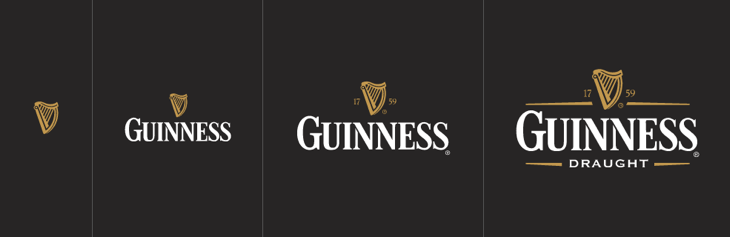
This site, Responsive Logos, is something I've had in my bookmarks for a while. I normally browse sites on an iPad and this one really needs a browser you can resize to get the full effect. Most brands (especially the big ones) will have variations on their logos for use in various contexts; logos for giant billboards will be different from those used on tiny black and white guarantee cards, say. Online, the story can be a bit different, with any adjustment to the browser size or context just left to resizing the one logo graphic. Some are done differently, and I've made a few sites that switch to a simpler logo, but it's not that widespread from what I can see.
Just in case you can't resize your browser, these are the Guinness variations
What Joe Harrison has done is take some big-name brands and simply and beautifully show how each can respond to a smaller browser size (or viewport, in the parlance). They all look like the real thing so I'm not sure whether he's created new images or got the smaller and simpler versions direct from the brand guidelines for each. It's a nice little site and a great demo if you ever have to explain it, to a client, say.
Image from Joe Harrison's site
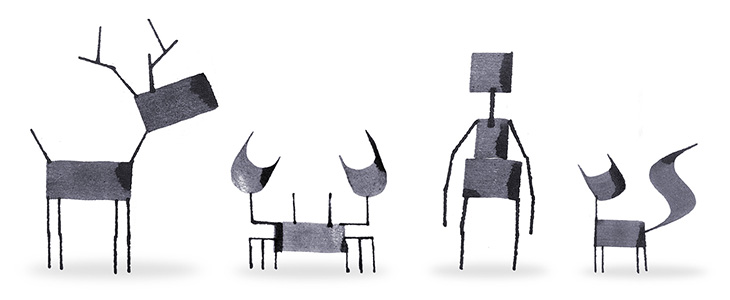
More fun are these Responsive Icons (or Rspnsv Icns) he's done, that you might remember from earlier in 2014.
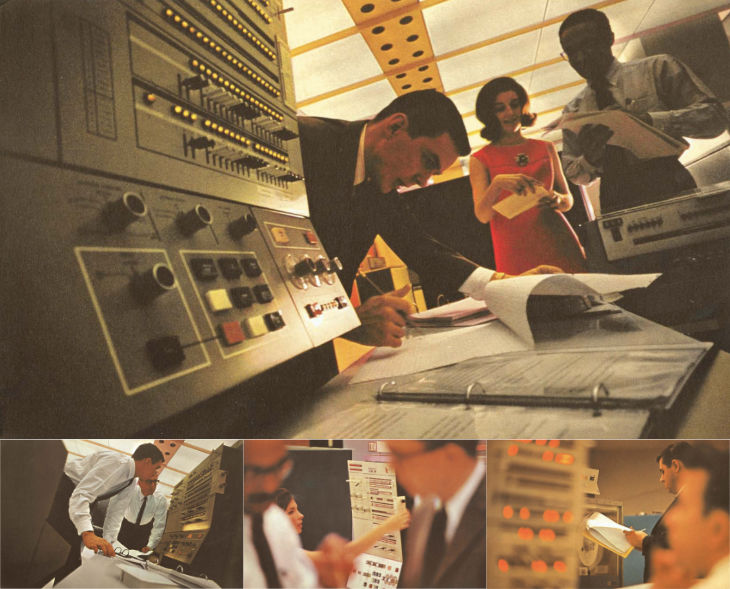
IBM have produced and commissioned some lovely stuff over the years, and their mid-century brochures and advertising are well-admired today. It’s the kind of quality they’re clearly aiming to recapture with their recent hiring and investment in design. There’s some gorgeous photography in this late ’60s brochure of theirs for the System/360 I found via Dinosaur’s Pen (which is a fantastic site for historical UI and product design).
I took these images from the PDF linked here and below
The warm lighting and careful use of a shallow depth of field is more used today for domestic products and holiday advertising, to see it used for a corporate context feels fresh and inviting. Odd, I know, given the age of it. There’s a bit much of the blue-toned high-key stuff around for ‘business’ imagery and I’m wondering whether we’ll see a retro fashion here too.
There’s a bit more info available on IBM’s promotion of the System/360 too. Following the trail of links finds this Flickr set by Colorcubic. They don’t want you downloading the photos they scanned in, but a quick search not only finds a PDF of the brochure but IBM’s own history of the system with more info and photos. To answer Shelby White’s question here, IBM’s designers didn’t overlay the photos with text, the design is quite reserved.
While I've been quiet I've been rebuilding the site in preparation for moving it to a new server. I managed to break it all several times and have made the air blue with oaths and curses against the modern world and all the technology in it. Still, turns out most of the time to have been a typo or me not reading the manual, in a sense. The rest of the time it's because things genuinely are awful with this stuff.
I changed a few aesthetic details and replaced a few functional doodads, but apart from that the site should be just the same. If you do spot a problem, please do let me know.
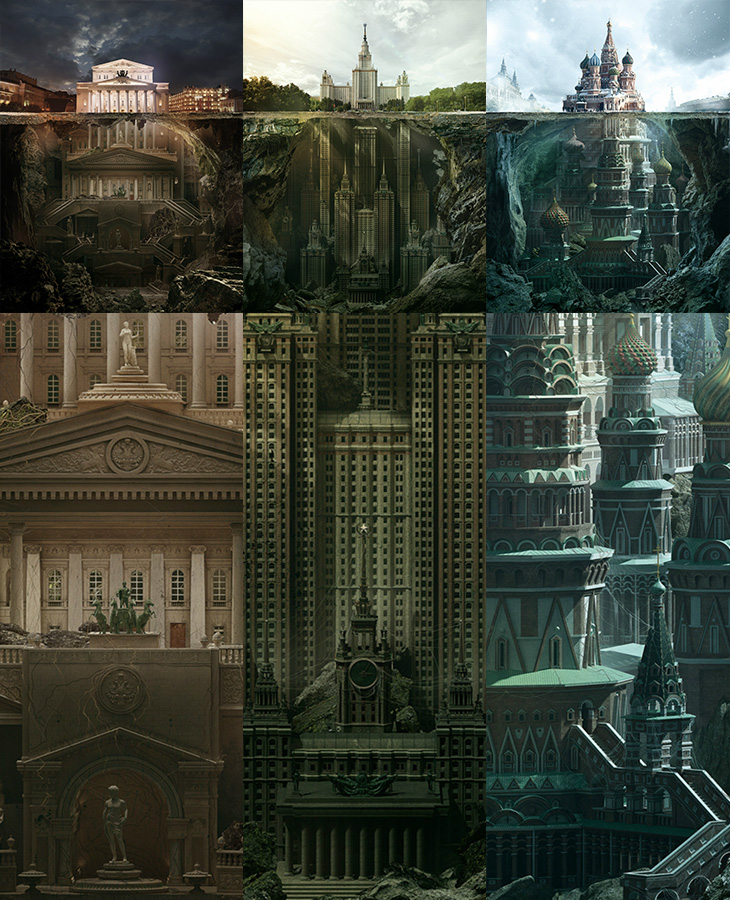
I could look at these illustrations all day. They’re for a press and outdoor campaign promoting the Schusev State Museum of Architecture. Compositionally they remind me of that iceberg image, which seems appropriate given the brief to show the history of architecture going much deeper than the buildings you see. The quality of the modelling and illustration is excellent and are well worth looking at more closely in the larger images. I think the sketch images included on Behance and Design You Trust are nice, but (somewhat unrealistically) I’d love to see all the discarded sketches and roughs they made along the way, I bet there are loads of good, interesting ideas that didn’t make it through. The extended buildings (The Bolshoi Theatre, Moscow State University¹ and St Basil’s Cathedral) look amazingly plausible, if a little reminiscent of something Nicolae Ceaușescu might have actually tried to build². The Moscow State University one is already a high-rise building so perhaps looks the most likely, if rather Gotham-esque. The St Basil’s one is just astounding.
Amazing. I rather like the red, green and blue theming of the images too.
As mentioned above, there’s a load of who-did-what information and bigger images on Behance and Design You Trust (where I first saw them), and a zoomable set of images on Carioca Studio’s site too.
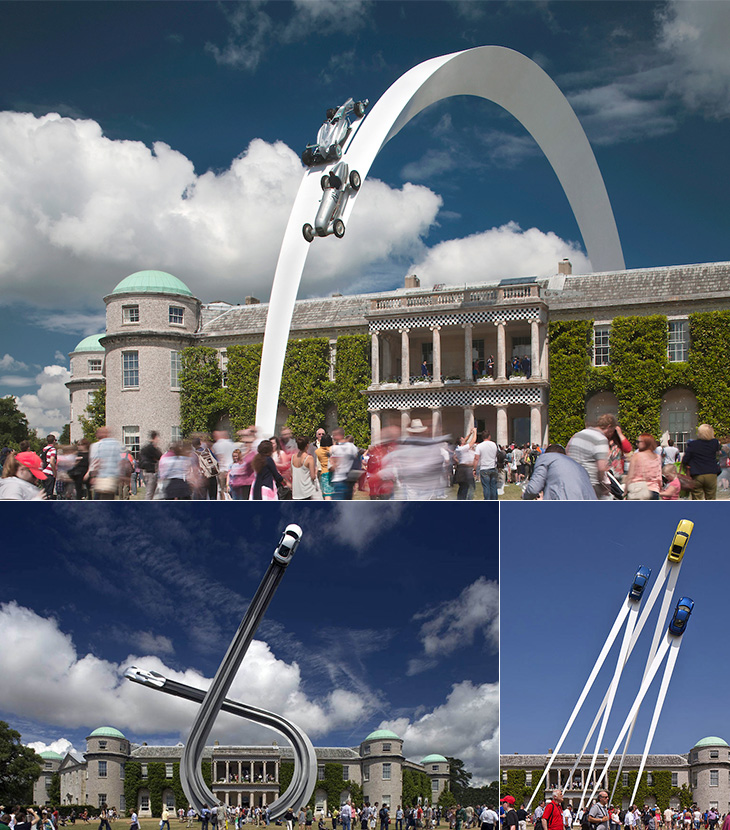
It must be the future already because, look, flying cars! It turns out that there’s been a whole series of these sculptures over the years at Goodwood Festival of Speed by Gerry Judah. I saw the photos of this year’s one on Dezeen and thought it was a nice concept rendering, but no, it’s real. What a thing!
I’ll have to go next year. Goodwood is almost literally round the corner from where I live.
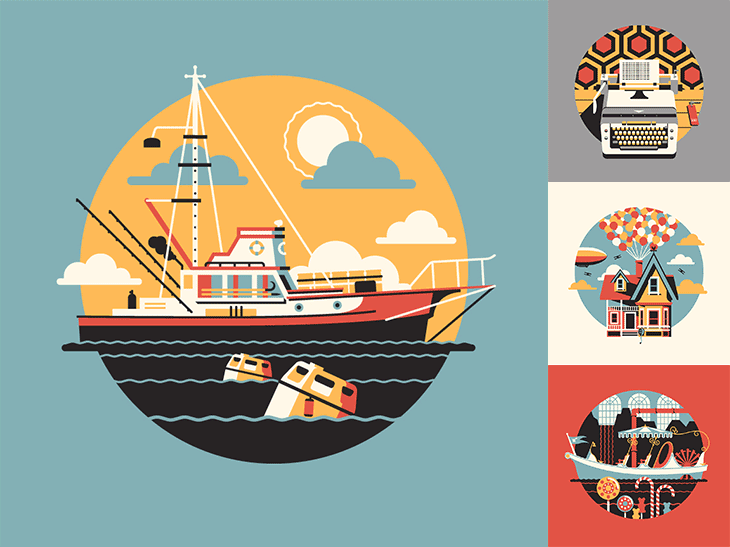
DKNG recently launched their ICON series of posters, showing a single scene or prop from a range of movies that are so recognisable they’re actually iconic. My knowledge of cinema is clearly lacking (hey, an opportunity to watch some more!) as there are a fair few I don’t recognise. They’re lovely things though, and tap into the current resurgent fashion for simple vector style illustration and desaturated flat colours. I’m very much a fan of the style and love how something so often linked to retro ephemera is being updated and made fresh and new again. However, I do feel a little sad that we’re going to see it so often that we’ll all get fed up of it pretty soon. In the meantime though, let’s enjoy it.
I already have so many prints that need framing, but I might need to get one or two more.
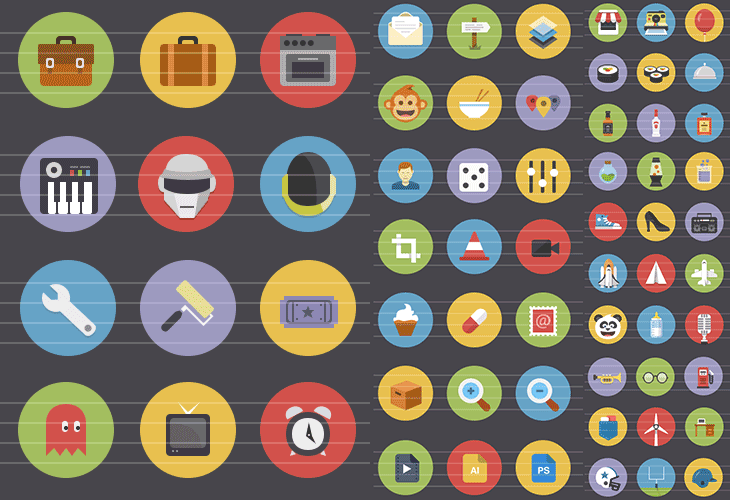
There’s plenty out there to look at in the style, and at the risk of being terribly commercial (I have absolutely no connection to either of these, I just want to link to them), there’s another link to stuff-for-sale that I rather like, these three icon sets, Flatties by UI Parade:
I do have a license for these, but for obvious reasons I’m showing only their obfuscated images.
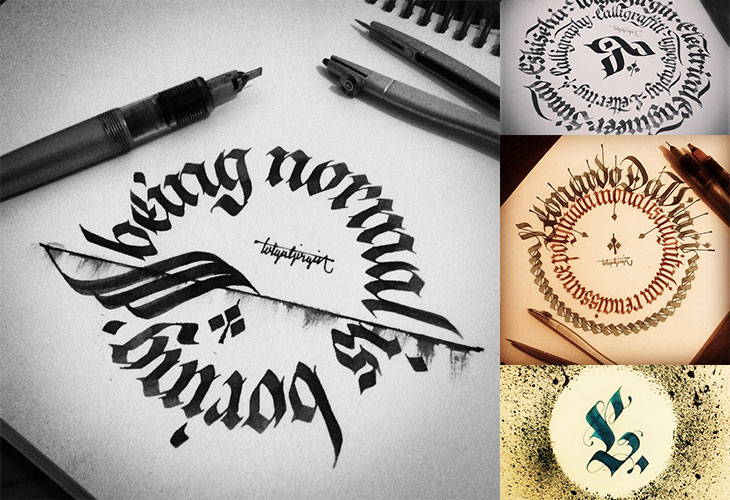
I found Tolga Girgin’s work from a link to his 3D lettering made with cut paper and traditional calligraphy on Behance, and went from there to his Instagram feed where there’s loads more of his work, including these beautiful circular compositions. I think I’m drawn to them because they remind me of coins and banknote patterns (which I am fond of). Go and have a look at the rest of it.
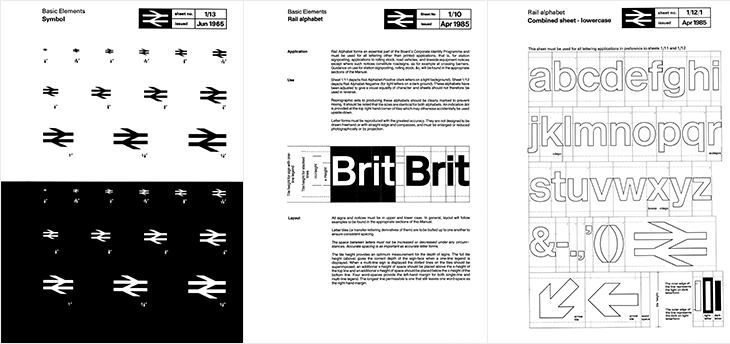
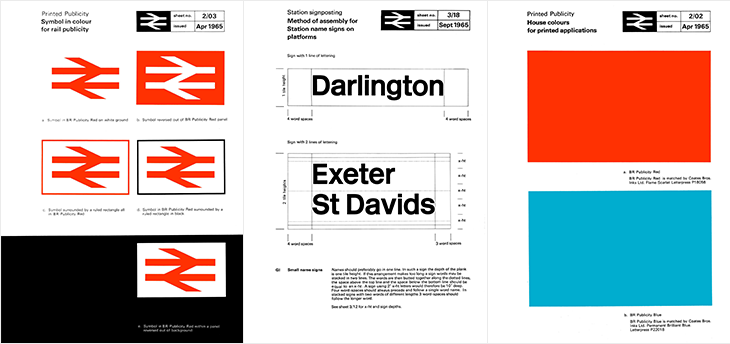
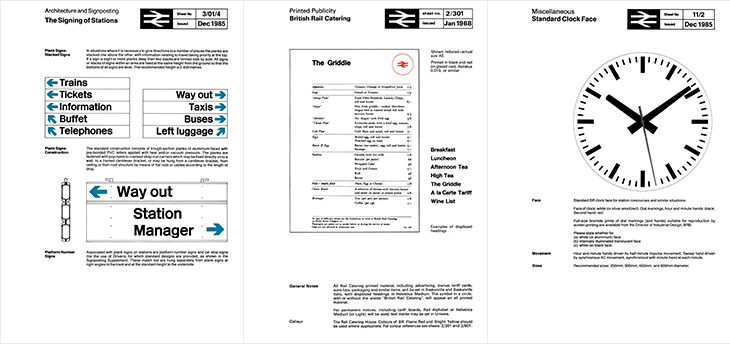
Here’s a glorious bit of design nostalgia for the New Year. It’s hardly a new find on the web; designer Nick Job first started this archive of the British Rail identity manuals in 2011, but I’ve just been reminded of it. Somehow I’ve never written about it either, which is a bit of an oversight given the entirely-unofficial and tongue in cheek name of this site: the British Rail alphabet and signage guidelines were also used by the British Airports Authority and National Health Service, making them as much a government standard as Britain ever usually manages.
The alphabet had two variants, one for dark-on-light type and one for light-on-dark. Light (and illuminated) type on dark backgrounds creates an optical effect known as ‘halation’ - i.e. it develops a halo, a slight sense of the letterforms being thicker than they are. To cope with this, the letterforms are reduced by the width of an outline for the lighter type, shown in the last panel above — while retaining the same spacing and other details of the type. It’s worth pointing out that a revival of the typeface is now available to license and as a web font from FontDeck.
For the non-British (or the very young) British Rail was the nationalised entity that ran the vast majority of railways (and a few ferry routes and other transport-related things) in the UK, beginning in 1948¹. It was rarely out of the news (more so on slow news days) for ‘record losses’, ‘strikes’, ‘failures’, ‘delays’ and so on. Starting in 1994 the network was dismantled and sold off, with the last few bits sold in 1997. Instead of a nationally-owned monopoly, we have regional monopolies owned by a variety of companies and (perhaps amusingly), the nationalised rail corporations of other countries. The headlines are now about ‘record price rises’, ‘record profits’ (also: greedy executives and shareholders), ‘overcrowding’, and yes, ‘delays’. According to the polls², privatisation is generally considered to have been a Very Bad Idea and Can It Go Back To How It Was, Please. Whatever your view or politics on the matter are, running an at-capacity rail network will never make you popular with the people who have to use it. I’m being charitable there.
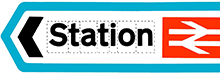
Despite each of the rail operating companies having their own brands, for most British people the British Rail identity is still a familiar part of the landscape, with the logo being the road sign symbol for any rail station, and much of the signage (especially at smaller stations) unchanged from pre-privatisation days. But what an identity! The whole thing is such a brilliantly consistent and well-designed system, owing much of its strength to its crisp, stark simplicity, to its minimalism and almost-total reliance on typography alone. There’s so little to it that there’s very little (virtually nothing) that can ever really look out of date or old fashioned — sure in the 80s everyone³ had a thing for Rotis (for heaven’s sake) and there was that grunge stuff in the 90s and we’ve had the web and all that⁴, but nothing that was really so outstandingly superior or more modern. What made the identity look bad was the usual thing that ruins most good things: neglect and apathy. A faded peeling sign in a shabby, half-ruined station with leaky roofs and deathtrap toilets is never going to look great, and by the time privatisation came along that was the caricature we were being presented with, and so out it went.
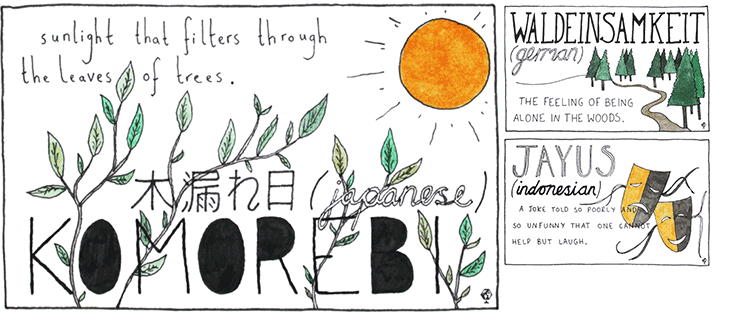
I use the title guardedly, as these words featured and illustrated by Ella Frances Sanders at Maptia are all perfectly translatable, but as phrases rather than as neat single words. There’s probably a neat word in a language somewhere that we could use to describe concepts-as-single-words that can’t be translated into single words in other languages. We could of course make one up, say, we could call them uniglottal, i.e. existing as a word in only one language. Words like this get borrowed pretty quickly if they’re useful enough, for example, Schadenfreude — and while words get borrowed all the time, here they’re a special kind of loan word, describing an idea rather than a thing.
One of the words in the list, the lovely Japanese word komorebi reminded me of a word that’s been sufficiently borrowed long enough not to be included in lists like this anymore: bokeh, which is well-known in photography, and like a lot of loan words doesn’t venture much outside a particular profession or technical niche. Then you get to thinking of it and notice more and more, and it reminds me of a French colleague half-jokingly saying, “You can tell if an English word is one of the ones we brought over*: it has more than one syllable”. Controversial.
If you’re interested in the idea of words like this, Better Than English posts a new one fairly frequently.